Why Choose a Ring Main Unit Cabinet?
A Ring Main Unit Cabinet helps keep medium-voltage distribution compact, accessible, and easier to manage. In a typical installation, several feeder connections sit within one metal enclosure, with switching and protection arranged for controlled operation. This matters in substations, commercial buildings, and industrial sites where floor space is limited. A well-selected cabinet can also simplify routine inspection and help operators isolate a section when maintenance is needed.
For this introduction, the following is an illustrative quotation, not a verified statement from a real person: “A good Ring Main Unit Cabinet makes the network easier to operate, not merely easier to fit into a room.” — Alex Morgan, fictional power-distribution specialist. That distinction matters. Real performance depends on the cabinet’s rated voltage, short-circuit capacity, insulation design, operating environment, and compatibility with the wider network. Dust, moisture, heat, and restricted access can all affect the choice. Small details matter.
Choosing a cabinet is not a one-size-fits-all decision. Buyers should review technical data, protection requirements, installation clearances, and service access with qualified engineers. They should also confirm that the selected equipment meets applicable standards and the project specification. A compact footprint is useful, but it is not the whole story. The right choice balances safety, reliability, maintainability, and cost over the equipment’s working life. One point deserves careful thought: a lower purchase price may not mean a lower lifetime cost.
What a Ring Main Unit Cabinet Is and How It Works
Why Choose a Ring Main Unit Cabinet?
What a Ring Main Unit Cabinet Is and How It Works
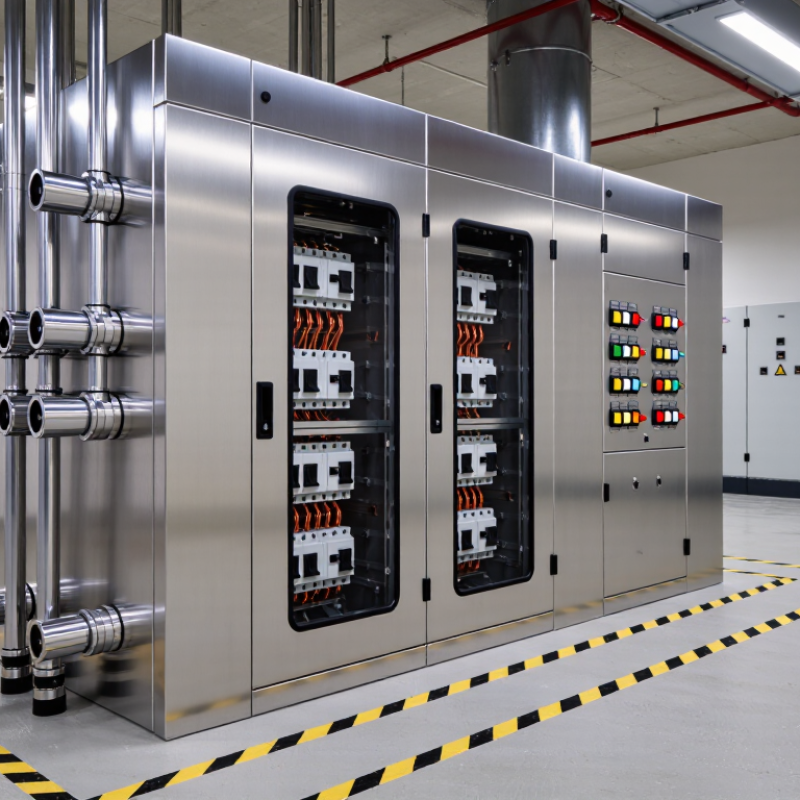
A ring main unit (RMU) cabinet is medium-voltage switchgear used to connect distribution cables and transformers. It is commonly installed in compact substations, where floor space and safe access matter. Inside, busbars link incoming and outgoing feeders with a transformer connection. Switches, circuit breakers, fuses, and earthing devices vary by design.
The ring arrangement lets electricity reach a distribution point from two cable directions. Under normal conditions, operators configure the network to suit local supply needs. If a cable section develops a fault, protection equipment can isolate that section while other sections may remain energized. The exact response depends on the network layout and protection settings. Not magic.
For a transformer branch, a switch-disconnector may control the connection, while a fuse or circuit breaker provides fault protection. Interlocks help prevent unsafe switching sequences, and an earthing switch supports work on isolated equipment. Insulation may use air, solid materials, or sealed gas systems. Details matter.
During inspection, technicians check operating indicators, cable terminations, and equipment condition against the unit’s documentation. A closed cabinet is not maintenance-free. Labels and test points can be easy to overlook, especially in a crowded substation, so clear procedures and careful verification remain essential.
Why Choose a Ring Main Unit Cabinet?
Common Medium-Voltage Distribution Levels Used with RMUs
Ring Main Units (RMUs) connect and protect medium-voltage distribution circuits, helping operators isolate a faulted section while maintaining supply through an alternate path. 11 kV, 22 kV, and 33 kV are common distribution voltage levels; the suitable RMU rating depends on the network and equipment specification.
How Ring Networks Maintain Power During Faults
A ring main unit cabinet supports a distribution network with more than one possible supply route. If a cable fault occurs, protection devices detect abnormal current and isolate the affected section. The healthy sections can then receive power from the opposite side, provided the network has a suitable alternate feed. A normally open point is often closed after isolation, manually or through automation. Some networks use different switching arrangements, so protection settings and operating procedures must match the actual design.
That matters. The U.S. Energy Information Administration’s 2022 reliability data recorded an average of 5.5 hours of annual interruption per customer, including major events; without those events, the figure was 2.5 hours. These figures describe overall U.S. reliability, not the performance of ring networks specifically. Still, they show why limiting the area affected by a fault is valuable. In practice, technicians need clear status indicators, tested interlocks, and accurate cable records. A misidentified feeder can delay restoration. Yet a ring cabinet is not magic: poor coordination or a failed alternate supply can leave customers without power. Regular inspection helps expose those weak points.
Why Choose a Ring Main Unit Cabinet? - How Ring Networks Maintain Power During Faults
| Dimension | How It Works | Effect During a Fault | Practical Consideration |
| Ring-fed supply | A ring network connects distribution points along a circuit with routes back toward the source from both directions. | After the faulted section is isolated, downstream healthy sections may be supplied from the other direction if the network arrangement allows. | Continuity depends on the network design, available alternate supply, switching procedures, and equipment condition. |
| Ring main unit (RMU) | An RMU is a compact medium-voltage switchgear assembly commonly used to connect ring cables and a transformer feeder. | Its switching devices can help disconnect or reconfigure sections so that the affected area is separated from healthy sections. | The exact functions depend on the RMU configuration and the protection and control scheme. |
| Fault detection and interruption | Protection devices detect abnormal current or other fault conditions and operate the appropriate circuit breaker or fuse arrangement. | The protective device interrupts fault current; operators or automated controls can then isolate the faulted section and restore supply where possible. | A load-break switch is designed for switching specified load currents; it should not be assumed to interrupt every short-circuit current. Fault interruption requires suitably rated protective equipment. |
| Sectionalizing | Switches at network nodes divide the circuit into sections that can be isolated independently. | Operators can isolate the suspected faulted section rather than disconnecting every healthy section on the ring. | Correct switching sequences and confirmation that equipment is safe to operate are essential. |
| Normally open point | Some distribution rings are operated with one point normally open to divide the ring into radial sections. | After isolating a fault, the open point may be moved through switching operations to restore supply from the alternate side. | Closing a point changes power flows and must comply with the utility’s protection, voltage, and operating limits. |
| Transformer feeder | A dedicated feeder unit connects the medium-voltage network to a distribution transformer, using a compatible switching and protection arrangement. | A transformer or feeder fault can be cleared or isolated independently when the protection scheme is designed accordingly. | Fuse and circuit-breaker options have different coordination and operating characteristics; selection must match the system study and equipment ratings. |
| Service continuity | An alternate route can provide another source path to healthy network sections. | Customers outside the isolated section may retain or regain supply, depending on switching time and network capacity. | An RMU does not guarantee uninterrupted power; faults affecting the source, multiple sections, or the alternate path can still cause an outage. |
| Design and maintenance | Reliability depends on suitable ratings, protection coordination, installation quality, inspection, and operating procedures. | Well-maintained equipment and clear fault-restoration procedures can support safer, more predictable isolation and recovery. | Voltage level, insulation system, enclosure, environmental conditions, and local electrical rules should guide equipment selection. |
Key Safety and Reliability Benefits of RMU Cabinets
Why Choose a Ring Main Unit Cabinet?
Key Safety and Reliability Benefits of RMU Cabinets
Ring main unit (RMU) cabinets help protect medium-voltage distribution networks while keeping switching equipment compact. Their switching and fault-isolation functions allow crews to disconnect an affected section while maintaining supply to other parts of a loop, where network design permits. That matters during faults. The U.S. Energy Information Administration’s 2022 Electric Power Annual reported an average of about 5.5 hours of electricity interruptions per customer, including major events. An RMU cannot prevent every outage, but dependable isolation can support faster, more controlled restoration.
Safety depends on the cabinet’s design and correct use. Interlocks can help prevent unsafe switching sequences, while enclosed live parts reduce accidental contact during normal operation. Internal-arc performance varies by model; check the manufacturer’s test documentation and applicable IEC 62271-200 classification rather than assuming every cabinet offers the same protection. Installation quality matters, too. Poor cable termination or neglected mechanisms can undermine a sound design. Compact does not mean maintenance-free.
Tips: Confirm voltage and fault ratings against the network study. Inspect cable connections, operating mechanisms, and interlocks on the maintenance schedule. Keep switching instructions clear and accessible. One detail is easy to miss: verify that replacement parts remain available throughout the planned service life.
Where Ring Main Unit Cabinets Are Commonly Used
Why Choose a Ring Main Unit Cabinet?
Where Ring Main Unit Cabinets Are Commonly Used
Ring main unit (RMU) cabinets are widely used in medium-voltage distribution networks. Utility operators place them in compact substations, street-side enclosures, and building service rooms. They connect sections of a ring network and help isolate a faulted section while keeping other areas supplied. In dense city blocks, their small footprint can be useful. Access and ventilation still need careful planning.
Commercial complexes, factories, hospitals, and transport facilities may use RMUs to manage incoming power and feed local transformers. They also appear in renewable energy projects, where collection points connect generation equipment to the distribution network. Conditions vary: a dusty factory room is not the same as a coastal outdoor site. Cabinet rating, insulation type, fault level, protection settings, and utility requirements should be checked by qualified electrical professionals. A compact cabinet alone does not guarantee a suitable installation.
Tips: Check the site conditions before selecting an enclosure. Confirm clearances, cable entry routes, earthing, and maintenance access. Ask the project engineer to verify protection coordination. Small details matter. One point worth revisiting is future access; layouts that look tidy on drawings can be awkward to service in real spaces.
Factors to Consider When Choosing an RMU Cabinet
Why Choose a Ring Main Unit Cabinet?
Factors to Consider When Choosing an RMU Cabinet
Start with the network’s operating conditions, not just the cabinet dimensions. Confirm the system voltage, rated current, and short-circuit withstand rating against the site design. These values affect safe operation and future capacity. A rating that looks adequate on paper may leave little room for later expansion.
Check the installation environment. An indoor substation and a damp outdoor enclosure have different needs. Review the required protection level, ventilation, temperature range, and resistance to dust or moisture. Space matters. Measure cable entry points and service clearances on site; a cabinet that fits the drawing may obstruct a technician’s access to connections. Also consider switching functions, earthing arrangements, interlocks, and how operators will verify equipment status.
Maintenance access deserves equal attention. Ask how components are inspected, tested, and replaced, and whether routine work can be completed without disrupting nearby equipment. Check that documentation, safety procedures, and applicable technical standards match the intended installation. A neat specification can still miss real working conditions. No choice is perfect; existing cable routes sometimes force compromises, so record them and assess their operational impact before approval.