Top 10 US Based PCB Manufacturers for Global Buyers

Choosing reliable us based pcb manufacturers requires more than comparing website claims or factory photographs. Global buyers must examine technical capability, production consistency, communication, and delivery discipline. A suitable partner should support the complete PCB journey, from design review and material selection to fabrication, testing, and shipment.

Details matter. Buyers should ask about multilayer board experience, controlled impedance, HDI capability, surface finishes, traceability, and inspection equipment. Certifications such as ISO 9001, IATF 16949, or AS9100 may strengthen confidence, depending on the application. However, a certificate alone proves little. Real reliability appears in documented processes, corrective actions, sample reports, and honest responses when problems occur.

John W. Mitchell, former IPC president and CEO, described the sector clearly: “The electronics industry is a global industry.” His observation remains important for overseas purchasers evaluating domestic American suppliers. US-based production can offer closer communication, stronger engineering support, and clearer accountability. It may also involve higher pricing and capacity limitations. That trade-off deserves careful consideration.

This guide reviews ten manufacturers serving international customers across different PCB categories and industries. The selection considers capabilities, certifications, manufacturing scope, support services, and reputation rather than size alone. Some companies may appear perfect on paper. They are not. Buyers should still request current quotations, capability statements, factory evidence, and production samples before making a decision.

The ranking is a practical starting point, not a permanent verdict. Supplier performance can change. Availability can change faster.

Top 10 US Based PCB Manufacturers for Global Buyers

Understanding the US PCB Manufacturing Landscape

Top 10 US Based PCB Manufacturers for Global Buyers

Understanding the US PCB Manufacturing Landscape

The US PCB manufacturing landscape serves aerospace, medical, industrial, automotive, and communication projects. Buyers often value traceability, engineering support, and consistent process control. These priorities can matter more than the lowest quoted price.

Domestic manufacturers commonly produce rigid, flexible, rigid-flex, and high-layer-count boards. Some facilities support rapid prototypes, while others focus on repeat production. A buyer should examine layer capability, minimum trace width, material options, and finished-board testing. Ask for documented quality procedures. Request sample inspection records when possible.

Lead times vary with board complexity, material availability, and production volume. A simple prototype may move quickly, but advanced multilayer boards require careful lamination and testing. Supply interruptions still happen. That reality deserves attention. Global buyers should also review export documentation, packaging methods, communication hours, and shipping responsibilities before placing an order.

Strong suppliers explain design-for-manufacturing risks before fabrication begins. They may identify tight spacing, thermal concerns, or drilling limitations in the original files. This experience can prevent expensive revisions. However, certifications alone do not guarantee dependable results. Production evidence matters more. Buyers should compare first-article data, inspection methods, corrective-action procedures, and support after delivery. The US market offers valuable technical depth, yet its higher labor costs may challenge price-sensitive projects. That trade-off is not always easy.

Criteria for Evaluating PCB Suppliers for Global Buyers

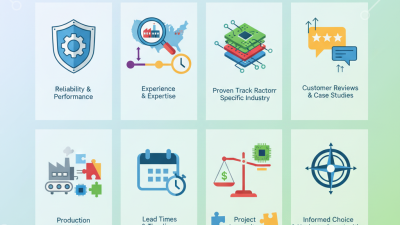
For global buyers, evaluating a PCB supplier starts with engineering evidence, not attractive pricing. Request controlled samples, stack-up drawings, impedance reports, and drill tolerance data. A capable manufacturer should explain fine traces, multilayer registration, copper balance, and thermal stress clearly. Ask about experience with your board type and operating environment. Medical, industrial, and automotive designs require different reliability controls.

Quality systems need more than certificates on a website. Check whether the supplier follows recognized IPC practices and maintains an audited quality system. Request traceability records for laminate, copper foil, solder mask, and finished boards. Ask how AOI, X-ray inspection, electrical testing, and final inspection are documented. Paperwork alone is not proof. Review defect rates, corrective actions, and recent production reports. A polished audit can still miss weak process discipline.

Global execution also depends on capacity, communication, and predictable delivery. Compare quoted lead times with actual production schedules, not promises from a sales desk. Confirm packaging methods, moisture protection, export documents, and shipment tracking. Make sure engineering questions receive precise answers across time zones. Cheap quotes often exclude tooling, testing, or urgent freight. A small pilot order can expose hidden assumptions before volume production. I have learned that even careful evaluations can overlook one detail: revision control. Require written approval for every design change, because one unnoticed file update can create expensive delays.

Profiles of the Top 10 US-Based PCB Manufacturers

The ten US-based PCB manufacturer profiles show a market built around specialization, not identical scale. Profile one serves aerospace and defense programs with traceable materials and controlled documentation. Profile two focuses on quick-turn prototypes, often delivering small batches within days. Profile three targets HDI boards for compact computing devices. Profile four produces rigid-flex circuits for cameras, robotics, and wearable equipment. Profile five concentrates on RF and microwave designs, where surface finish and impedance control matter greatly.

Profile six handles heavy-copper boards for power conversion and industrial controls. Profile seven supports medical electronics under strict process controls. Profile eight supplies automotive multilayer boards, where thermal cycling exposes weak construction. Profile nine offers high-volume multilayer production with automated inspection. Profile ten combines fabrication and assembly, reducing shipment delays for overseas buyers. IPC’s North American PCB Statistical Program has repeatedly shown uneven sales and order patterns across the region. Prismark’s 2024 industry analysis placed the global PCB market near 90 billion dollars, confirming strong international demand. A ranking is never fully neutral. A technically excellent supplier may still quote slowly or lack export experience.

Tips: Global buyers should request recent capability tables, sample cross-sections, impedance reports, and factory audit records. Check whether certifications match the product’s end use, such as AS9100, ISO 13485, or IATF 16949. Ask about copper thickness, minimum trace width, production locations, and engineering response time. A low unit price can hide higher freight, testing, or rework costs. Verify everything.

Comparing Capabilities, Certifications, Lead Times, and Costs

Top 10 US Based PCB Manufacturers for Global Buyers

Comparing Capabilities, Certifications, Lead Times, and Costs

A serious top-ten comparison should begin with capability, not advertising. Check layer counts, minimum trace widths, controlled impedance, rigid-flex options, and assembly testing. IPC’s December 2024 data showed North American PCB sales were 14.3% below December 2023, while bookings fell 12.2%. That softer cycle makes capacity evidence more useful than optimistic promises. Ask for recent on-time delivery data and factory-level production limits.

Certifications need careful reading. ISO 9001 supports quality management, while AS9100 and ISO 13485 address aerospace and medical requirements. UL 796 and IPC-6012 also help verify board construction and performance. Demand proof. A certificate may cover one facility, not every process or product family. I would request audit dates, scope statements, material traceability, and sample inspection records.

Lead times commonly range from 5–15 working days for prototypes and 3–8 weeks for production. Complex rigid-flex boards, impedance control, and imported materials can extend that schedule. Costs should include engineering review, tooling, testing, freight, and possible redesigns. The 2024 Fortune Business Insights market report estimated the global PCB market at approximately USD 86 billion in 2023. Growth is real, but procurement mistakes remain expensive. Price is not performance. A low unit quote can hide longer approval cycles, higher scrap, or weak after-sales support. The comparison is not perfectly clean, because each supplier may quote different panel sizes and test coverage.

Top 10 US Based PCB Manufacturers for Global Buyers - Comparing Capabilities, Certifications, Lead Times, and Costs

Anonymous supplier comparison based on commonly published US PCB manufacturing capabilities and indicative market benchmarks.
Rank Supplier ID Core Capabilities Typical Board Scope Certifications and Compliance Standard Lead Time Expedited Lead Time Indicative Prototype Cost Indicative Production Cost Global Buyer Considerations
1 US Supplier 01 Rigid PCB Rigid-flex HDI RF/microwave Up to 30+ layers; fine-pitch SMT support; controlled impedance; heavy copper options up to approximately 6 oz. ISO 9001; IPC-6012; IPC-A-600; ITAR-registered operations available; UL-recognized materials. 10–15 business days 5–8 business days $25–$75 per prototype board $8–$18 per board Strong fit for aerospace, defense, medical, and high-reliability programs; export documentation may require advance review.
2 US Supplier 02 Quick-turn PCB Multilayer Metal-core Assembly 2–20 layers; standard FR-4, aluminum-backed boards, blind/buried vias, impedance-controlled designs. ISO 9001; IPC-6012; IPC-A-600; UL 94V-0 material options; RoHS and REACH support. 7–12 business days 3–5 business days $18–$55 per prototype board $5–$14 per board Balanced option for industrial controls, power electronics, instrumentation, and low-to-medium volume production.
3 US Supplier 03 Advanced HDI Flex Rigid-flex Laser microvias Up to 24 layers; microvia HDI; flexible polyimide constructions; sequential lamination and fine-line routing. ISO 9001; ISO 13485 capability; IPC-6013; IPC-A-600; RoHS-compliant production. 15–25 business days 8–12 business days $40–$110 per prototype board $12–$30 per board Suitable for compact medical, aerospace, wearable, and portable electronics where miniaturization is important.
4 US Supplier 04 RF/microwave High-frequency Multilayer Controlled impedance PTFE and hybrid dielectric materials; low-loss laminates; RF stack-up engineering; plated and non-plated edge features. ISO 9001; IPC-6012; IPC-A-600; material traceability; aerospace and defense quality procedures. 15–30 business days 8–15 business days $35–$100 per prototype board $15–$40 per board Best suited to antennas, radar, satellite communications, test equipment, and other high-frequency applications.
5 US Supplier 05 High-reliability PCB Heavy copper Backplanes Large format Up to 32 layers; high layer-count backplanes; copper weights from 1 oz to approximately 10 oz; large panel formats. ISO 9001; AS9100-style quality systems; IPC-6012; IPC-A-600; UL and traceability programs. 20–35 business days 10–18 business days $45–$125 per prototype board $18–$45 per board Appropriate for power distribution, transportation, aerospace, defense, and mission-critical infrastructure.
6 US Supplier 06 Prototype PCB Low volume PCB assembly DFM review 1–12 layers; standard FR-4; surface finishes including HASL and ENIG; turnkey or consigned assembly services. ISO 9001; IPC-A-600; IPC-A-610 assembly inspection; RoHS and REACH support. 5–10 business days 2–4 business days $12–$40 per prototype board $4–$11 per board Cost-effective for engineering samples, pilot runs, university projects, and early-stage product development.
7 US Supplier 07 Flexible PCB Rigid-flex Thin flex SMT assembly 1–8 flex layers; polyimide constructions; stiffeners, coverlay, and fine-pitch component assembly. ISO 9001; IPC-6013; IPC-A-600; IPC-A-610; RoHS-compliant materials available. 12–20 business days 7–10 business days $30–$90 per prototype board $10–$28 per board Useful for cameras, sensors, medical devices, automotive modules, and space-constrained consumer products.
8 US Supplier 08 Quick-turn multilayer LED PCB Metal-core Small batch 2–16 layers; aluminum and copper metal-core boards; standard FR-4; thermal-management design assistance. ISO 9001; IPC-6012; IPC-A-600; UL-recognized materials; RoHS and REACH documentation. 7–14 business days 3–6 business days $15–$50 per prototype board $4.50–$13 per board Good choice for LED lighting, motor controls, industrial electronics, and thermal applications with moderate complexity.
9 US Supplier 09 High-volume PCB Automated production Multilayer Assembly 2–24 layers; automated drilling and imaging; scalable panel production; component sourcing and box-build options. ISO 9001; IPC-6012; IPC-A-600; IPC-A-610; RoHS, REACH, and conflict-minerals reporting. 15–25 business days 8–12 business days $15–$45 per prototype board $2.50–$8 per board Most competitive for recurring production volumes, provided forecast commitments and stable design files are available.
10 US Supplier 10 Defense PCB Aerospace Complex multilayer Secure supply chain Up to 40 layers; complex sequential lamination; high-reliability materials; traceability and lot-control programs. AS9100; ISO 9001; IPC-6012; IPC-A-600; ITAR-registered operations available; NIST-aligned security procedures. 20–40 business days 12–20 business days $50–$150 per prototype board $20–$55 per board Premium pricing reflects documentation, testing, security controls, traceability, and stringent acceptance requirements.
Benchmark basis: Cost ranges are indicative estimates for a typical 4-layer FR-4 board, approximately 100 × 100 mm, 1 oz copper, standard solder mask, and common surface finishes. Prototype pricing generally assumes 5–20 boards, while production pricing assumes recurring orders of approximately 500–5,000 boards. Actual quotations vary according to layer count, materials, tolerances, testing, tooling, assembly, shipping, certification requirements, and order volume. Lead times are business-day estimates after receipt of complete and approved manufacturing data.

Key Considerations for International PCB Sourcing Decisions

Top 10 US Based PCB Manufacturers for Global Buyers

Key Considerations for International PCB Sourcing Decisions

International buyers should evaluate more than a supplier’s location. The Global Electronics Association’s 2024 industry data shows continuing pressure on electronics supply chains, especially from longer qualification cycles and capacity constraints. A capable US-based manufacturer should provide traceability, controlled documentation, and realistic production schedules. Ask for evidence of compliance with IPC-6012, IPC-A-600, ISO 9001, and relevant environmental requirements. Certificates alone are not enough.

Look closely at engineering support. Can the factory review stack-up design, impedance targets, drill limits, and thermal demands before quoting? Small errors here may create large costs during assembly. The U.S. International Trade Commission has reported strong dependence on imported electronic components, making supply continuity an important sourcing concern. Confirm material availability, approved alternates, and customs documentation before placing a purchase order.

Cost comparisons can mislead. A lower unit price may exclude tooling, testing, expedited freight, or scrap risk. Request sample yields and first-article inspection records. Still, supplier data may be incomplete. Buyers should verify it through independent audits and pilot orders. Grand View Research estimates that the global PCB market will continue expanding through 2030, increasing competition for advanced capacity. That growth sounds positive, but it can also mean longer queues for HDI, rigid-flex, and quick-turn production. Clear communication matters. Time-zone gaps matter too.