
Top 10 Portable Gas Detectors for Global Buyers

Gas hazards rarely announce themselves. A leak may be invisible, odorless, and already dangerous before a worker notices symptoms. A Portable Gas Detector can provide an early warning, but only when its sensors match the gases present and its alarms remain clear in noisy, busy work areas. For global buyers, the decision involves more than price: sensor life, response time, battery performance, data logging, service access, and regional approvals all deserve attention.

The scale of workplace risk is substantial. The International Labour Organization’s 2019 report, Safety and Health at the Heart of the Future of Work, estimated 2.78 million work-related deaths and 374 million non-fatal occupational injuries each year. These figures cover many hazards, not gas exposure alone, but they underline why dependable monitoring matters. Practical details count. Can a gloved operator read the screen outdoors? Can a technician obtain calibration support nearby? Does the device suit the site’s likely gases and temperature range? NIOSH’s Pocket Guide to Chemical Hazards offers exposure information for many workplace substances; buyers can use such references to frame hazard reviews, not replace them.

This Top 10 comparison focuses on field use, core detection capabilities, and buying considerations across markets. Still, no ranking fits every site. A compact unit may be easier to carry, yet offer fewer sensors or less battery life. That trade-off is easy to overlook. Treat the list as a starting point, then confirm specifications, maintenance needs, and applicable approvals with the manufacturer and a qualified safety professional.
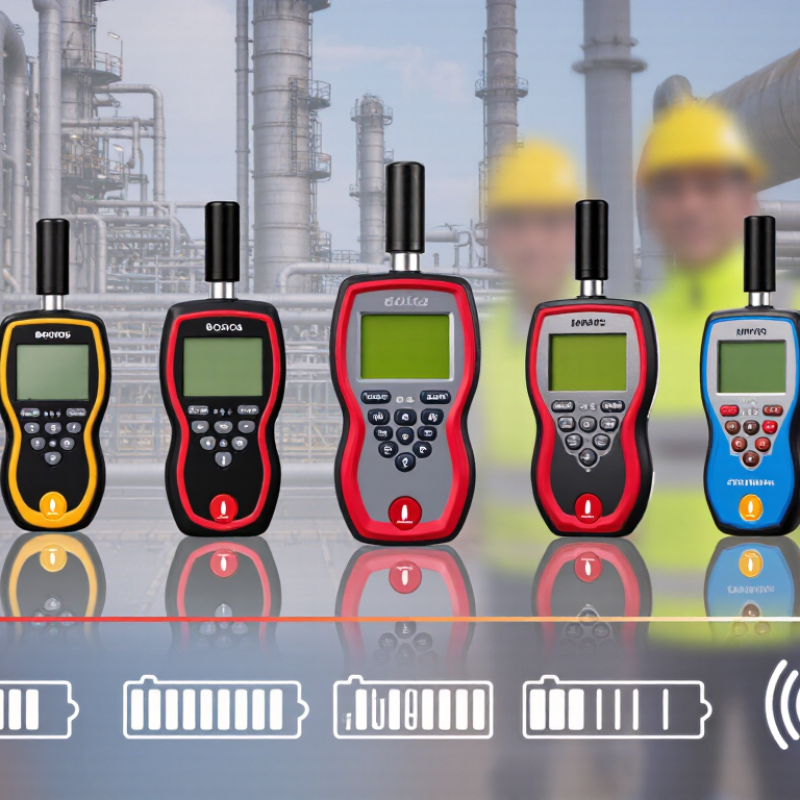
Top 10 Portable Gas Detectors for Global Buyers

What Portable Gas Detectors Measure: Oxygen, Flammables, and Toxic Gases

A portable gas detector can track oxygen, flammable gases, and selected toxic gases, but each reading means something different. Oxygen is usually shown as a percentage by volume; too little can impair breathing, while too much can increase fire risk. Flammable gases are commonly displayed as a percentage of the lower explosive limit, or LEL. Toxic gases, such as carbon monoxide or hydrogen sulfide, are typically measured in parts per million. Small numbers can still matter. The exact gases detected depend on the instrument’s sensors.

Tips: Check the displayed gas names before entering a work area. A four-gas model may not detect every hazard. Keep the sensor inlet clear, and follow the maker’s instructions for bump testing and calibration. A blocked inlet or overdue check can make readings less dependable. That detail is easy to miss.

Readings also depend on conditions. Temperature, humidity, sensor age, and interfering gases may affect results. Sample confined or poorly ventilated spaces from a safe position, using a suitable sampling probe when needed. Wait for the reading to stabilize, and compare it with site procedures. A detector is an aid, not proof that an area is safe. It can be tempting to trust one clean reading; that deserves a second thought, especially if conditions may change.

How Sensor Technologies Differ: Catalytic Bead, Infrared, and PID

Portable gas detectors may look similar, but their sensors answer different questions. Catalytic-bead sensors measure combustible gases through oxidation on a heated element. Readings commonly appear as a percentage of the lower explosive limit. These sensors need sufficient oxygen and can be affected by contaminants such as silicone vapors. Infrared sensors detect specific gases through how they absorb infrared light. They do not rely on oxygen and can suit oxygen-poor environments. However, many infrared models do not detect hydrogen. Not interchangeable.

A photoionization detector, or PID, is designed to measure many volatile organic compounds. It can help identify changing vapor levels, but it does not name the substance or measure every gas. Methane is a common blind spot. Lamp energy, humidity, and the selected correction factor can also affect readings. A PID result is not a complete chemical identification. That distinction is easy to miss on a crowded specification sheet.

Tips: Match the sensor to the gases, expected range, and work environment. Check the manual for calibration gas, cross-sensitivities, and operating limits. Test the device before use, and follow its maintenance schedule. If readings seem inconsistent, pause and verify them with a suitable method. No sensor covers every hazard.

Top 10 Portable Gas Detectors for Global Buyers: How Sensor Technologies Differ

Typical application fit for catalytic bead, infrared (IR), and photoionization detector (PID) sensors

Scores are qualitative guide values, not standardized performance measurements: 0 indicates generally unsuitable and 5 indicates a strong typical fit. Catalytic bead sensors detect combustible gases but need oxygen; infrared sensors detect many hydrocarbons without oxygen but generally do not detect hydrogen; PID sensors are widely used for VOC screening, but do not detect methane. Actual capability depends on the target gas, sensor design, and calibration.

Which Limits Matter: OSHA Uses 19.5% O₂ and 10% LFL Thresholds

A portable gas detector is only useful when its readings are understood in context. OSHA’s permit-required confined-space standard defines oxygen below 19.5% by volume as oxygen-deficient. It also identifies flammable atmospheres above 10% of the lower flammable limit (LFL) as hazardous. These are hazard thresholds, not a substitute for a site-specific alarm plan. Small margins matter.

OSHA’s 29 CFR 1910.146 Appendix B recommends checking oxygen first, flammables second, and toxic gases last. That order matters because some combustible-gas sensors can read inaccurately when oxygen is low. NIOSH’s report Preventing Occupational Fatalities in Confined Spaces (Publication 86-110) likewise stresses atmospheric testing before entry. For buyers comparing portable units, check sensor ranges, alarm settings, calibration requirements, and whether the instrument measures the gases present in the actual work area.

A reading can change between the hatch and the work zone. Temperature, airflow, sensor age, and sampling-tube length can all affect results. Don’t treat one “safe” reading as a guarantee. In practice, teams should follow written procedures, bump-test instruments as directed, and keep records of calibration and checks. The awkward part is easy to overlook: a detector may be technically capable, yet poorly matched to the task.

Top 10 Portable Gas Detectors for Global Buyers - Which Limits Matter: OSHA Uses 19.5% O₂ and 10% LFL Thresholds

Important: OSHA identifies an atmosphere below 19.5% oxygen as oxygen-deficient and, for permit-required confined spaces, an atmosphere above 10% of the lower flammable limit (LFL) as hazardous. These are hazard thresholds, not universal detector specifications or proof that a space is safe. Instrument ranges and alarm settings vary by device, gas, calibration, and applicable regulations.

Rank Detector configuration Typical gases monitored Common measurement range* Key limit or use consideration Best suited for
1 Four-gas personal monitor O₂, combustible gases (% LEL), CO, H₂S O₂: commonly 0–30% vol; LEL: 0–100% LEL; CO and H₂S: ranges vary by sensor A versatile choice for checking oxygen deficiency and combustible-gas hazards, including the 10% LFL criterion where applicable. Routine confined-space and general industrial monitoring
2 Oxygen and LEL monitor O₂ and combustible gases (% LEL) O₂: commonly 0–30% vol; LEL: commonly 0–100% LEL Check oxygen readings against the 19.5% deficiency threshold and combustible readings against the applicable LFL criterion. Basic atmosphere screening where toxic-gas channels are not required
3 CO-focused personal monitor Carbon monoxide (CO), sometimes with O₂ CO: commonly 0–500 ppm; available ranges vary CO exposure limits depend on the applicable workplace rules and exposure period; do not treat an alarm setting as a universal limit. Combustion work, vehicle areas, and hot-work monitoring
4 H₂S-focused personal monitor Hydrogen sulfide (H₂S), sometimes with CO or O₂ H₂S: commonly 0–100 ppm; some sensors use other ranges Select alarms and response procedures for the site’s exposure limits; H₂S can impair the sense of smell. Wastewater, oil and gas, and other H₂S-risk work
5 Diffusion-type personal monitor Depends on fitted sensors; often O₂, LEL, CO, and H₂S Depends on sensor configuration Measures gases reaching the sensor by diffusion; response can be affected by airflow and the device’s position on the wearer. Continuous worker-worn monitoring during mobile tasks
6 Pumped gas detector Sensor-dependent; commonly available with O₂, LEL, CO, and H₂S channels Depends on fitted sensors and sampling accessories A suitable probe and tubing can support remote sampling; allow for transport and sensor response time, and test multiple elevations where needed. Pre-entry checks in tanks, pits, and other hard-to-reach spaces
7 Combustible-gas detector Flammable gases or vapors, displayed as % LEL Commonly 0–100% LEL OSHA’s confined-space hazardous-atmosphere definition includes readings above 10% LFL. Catalytic sensors can be affected by oxygen deficiency or sensor poisons; sensor suitability matters. Flammable-gas leak checks and combustible-atmosphere assessment
8 Oxygen-only monitor Oxygen (O₂) Commonly 0–30% vol Below 19.5% is oxygen-deficient under OSHA’s confined-space definition; above 23.5% is oxygen-enriched. This instrument does not detect toxic or combustible gases. Oxygen monitoring where other gas hazards are assessed separately
9 VOC photoionization detector (PID) Many volatile organic compounds (VOCs), depending on lamp energy and compound Common instruments offer ranges in ppm; the upper range and resolution vary by configuration A PID is generally a screening tool, not a compound-specific identification method; response factors and compounds not ionized by the lamp affect readings. VOC screening, leak surveys, and industrial hygiene investigations
10 Target-gas electrochemical monitor Gas-specific toxic sensors such as SO₂, Cl₂, NH₃, or HCN Varies substantially by target gas and sensor; verify the specified range before purchase Cross-sensitivity, detection range, and applicable exposure limits differ by gas. Confirm the exact sensor is suitable for the site hazard. Chemical processing and jobs with a known, gas-specific toxic hazard

*Ranges shown are commonly encountered examples, not guaranteed specifications. Confirm the exact instrument range, sensor technology, calibration gas, alarm configuration, environmental limits, and local regulatory requirements before selection. Bump-test and calibrate instruments according to the manufacturer’s instructions and workplace procedures.

How to Compare the Top 10: Channels, Runtime, Alarms, and Protection

When comparing the top 10 portable gas detectors, count sensor channels before comparing prices. A four-gas unit may monitor oxygen, combustible gases, and two toxic gases, while another model covers different hazards. Match the sensor set to the site assessment, not a generic checklist. OSHA’s permit-space standard defines oxygen below 19.5% and flammable gas above 10% of its lower flammable limit as hazardous conditions. Those thresholds make alarm range and configuration important buying criteria.

Runtime figures need context. Ask whether the stated hours apply with the pump, wireless connection, and alarms active. Cold mornings, aging batteries, and frequent bump tests can reduce practical availability. Check the details. A detector that lasts a full shift on paper may need charging before a long inspection ends. Compare charging time, replaceable battery options, and low-battery warnings alongside rated runtime.

Alarm design should be judged in the actual work setting. Look for clear visual, audible, and vibration alerts, then consider noise, gloves, and low light. Protection ratings and intrinsic-safety documentation should fit the intended environment; verify certifications rather than relying on a sales label. A spec sheet can still mislead. Record response checks, calibration status, and alarm visibility during evaluation. Compare these records across candidates, because the cheapest unit may create more downtime or missed alerts.

How Global Buyers Check Certifications, Calibration, and Service Availability

For global buyers, a portable gas detector’s certificate must match the exact model, sensor setup, and intended market. Check the document number, issuing body, and any listed limitations. A familiar-looking logo is not enough. Requirements can vary by destination and application, so confirm acceptance with the relevant local authority or project specification. Keep copies with purchasing records.

Calibration deserves the same scrutiny. Ask how the instrument is calibrated, what gas and equipment are used, and whether the supplier provides dated, traceable records. Follow the manufacturer’s guidance, while considering site conditions such as dust, humidity, and frequent use. Calibration intervals are not one-size-fits-all. That detail is easy to overlook. Also check service coverage before ordering: local repair options, spare sensor availability, turnaround estimates, and access to compatible calibration gas can affect uptime. A polished sales promise is not a service plan; request written details, and compare them with your operating schedule.

Tips: Check the details. Match certificates to the delivered configuration, confirm calibration records, and ask who handles repairs in your region. If answers arrive slowly before purchase, consider how support may feel during an outage.