How to Choose the Right Electric Forklift Battery for Your Needs?
Choosing the right Electric Forklift Battery is crucial for efficient warehouse operations. A well-suited battery enhances performance and reduces downtime. With various types of batteries available, it can be overwhelming to decide which one meets your specific needs.
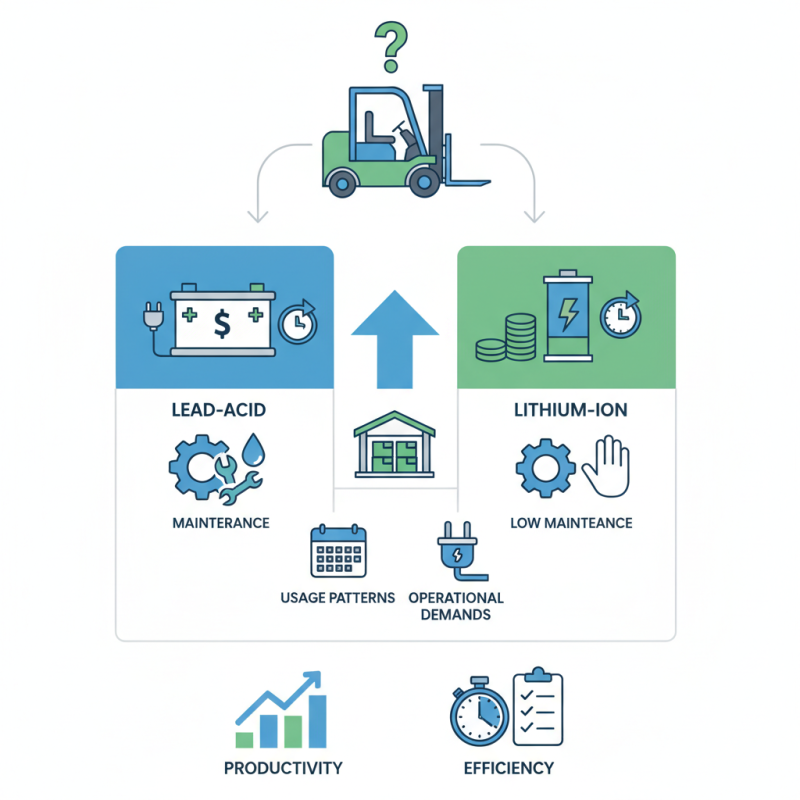
Understanding the types of Electric Forklift Batteries is the first step. Lead-acid batteries are popular for their affordability. However, lithium-ion options offer higher energy density and faster charging times. The decision should be based on your lift truck usage patterns and operational demands.
Moreover, consider the battery's maintenance requirements. Some batteries need more upkeep than others. This can significantly impact your overall operational efficiency. Take time to assess your inventory handling needs and power needs carefully. Remember, the right battery choice can elevate productivity, but overlooking details may lead to inefficiencies.
Understanding Electric Forklift Battery Types and Technologies
When selecting an electric forklift battery, understanding battery types and technologies is essential. There are primarily three types: lead-acid, lithium-ion, and nickel-based batteries. Each type has unique characteristics that affect performance and lifespan. Lead-acid batteries are popular due to their cost-effectiveness and robustness. However, they require regular maintenance and have limited cycle life, often around 1,500 cycles. In contrast, lithium-ion batteries offer a longer lifespan and higher energy density, with cycle lives exceeding 5,000 cycles. This can result in less frequent replacements, which may save costs in the long run.
The technology behind these batteries significantly influences their efficiency. For example, lithium-ion batteries charge faster and operate effectively in a broader temperature range compared to lead-acid options. According to a report by the Industrial Truck Association, about 43% of warehouses have started adopting lithium-ion technology. This shift reflects the industry’s move toward more sustainable and efficient energy solutions. However, lithium-ion batteries often involve higher upfront costs, making financial evaluation critical for businesses.
Choosing the right battery also includes considering application-specific needs. Factors such as load capacity, operating hours, and charging infrastructure influence selection. Many businesses report mismatches between battery choice and operational demands, leading to inefficiencies. Ongoing evaluation of battery performance is crucial for optimizing forklift operations. Making informed decisions can directly impact productivity and costs in the long term.
How to Choose the Right Electric Forklift Battery for Your Needs?
| Battery Type | Voltage Range (V) | Capacity (Ah) | Cycle Life | Weight (kg) | Advantages | Disadvantages |
| Lead-Acid | 12 - 48 | 100 - 600 | 800 - 1500 | 150 - 800 | Cost-effective, readily available | Heavy, requires maintenance |
| Lithium-Ion | 24 - 80 | 35 - 400 | 2000 - 5000 | 50 - 300 | Lightweight, fast charging | Higher initial cost |
| Nickel Cadmium | 12 - 48 | 100 - 300 | 1000 - 2000 | 200 - 600 | Resistant to temperature variations | Environmental concerns, higher cost |
| Gel | 12 - 48 | 100 - 200 | 500 - 1000 | 60 - 200 | Maintenance-free, leak-proof | Lower discharge rates |
Evaluating Your Specific Operational Requirements and Constraints
Choosing the right electric forklift battery is critical for operational efficiency. Evaluating your specific requirements is the first step. Consider factors like load capacity, operational hours, and charging infrastructure. According to the Forklift Truck Association, about 30% of operational downtime stems from inadequate battery performance. Hence, understanding your usage patterns is key.
Analyze your daily operational demands. For instance, a warehouse with multiple shifts needs batteries designed for high cycle times. Surveys from industry reports indicate that lead-acid batteries are suitable for applications requiring frequent deep discharging, while lithium-ion options excel in short charge times and longer lifespans. However, the initial cost of lithium-ion can be a barrier for some operations.
Additionally, consider space constraints. Battery dimensions and weight can impact your fleet management. Inadequate space can lead to safety hazards and inefficient operations. Industry findings suggest that 15% of users underestimate the importance of battery size. Addressing these operational constraints early can save time and costs later. Each facility is unique, and a one-size-fits-all approach is often inadequate. Reflecting on your specific needs can lead to a more informed decision.
Assessing Battery Capacity and Runtime for Optimal Performance
Choosing the right electric forklift battery is crucial for maximizing performance. Battery capacity and runtime directly impact operational efficiency. According to industry reports, about 65% of electric forklift users face challenges with insufficient battery capacity. A common scenario involves batteries dying mid-shift, leading to costly downtime.
When assessing battery capacity, it’s vital to consider the specific applications. Heavy-duty operations might require a larger capacity. For instance, a battery rated at 600Ah typically supports longer runtimes than one at 400Ah. However, larger batteries may involve higher upfront costs and weight, affecting the forklift's mobility. Striking a balance is essential for optimal performance.
Runtime also plays a significant role in productivity. Studies indicate that maintaining a battery charge above 20% can enhance the overall lifespan by 30%. Many operations do not account for the thermal effects on battery life, which can cause rapid discharge if overlooked. Operators should regularly monitor both capacity and runtime to avoid potential pitfalls in their operations. A well-informed choice ensures reliable performance in demanding environments.
Considering Charging Options and Maintenance Needs for Longevity
When selecting an electric forklift battery, it’s critical to consider charging options and maintenance needs. Recent industry reports indicate that battery lifespan is directly linked to charging habits. Well-managed charging schedules can increase the life of a battery by up to 30%. Techniques such as opportunistic charging during breaks can minimize downtime while ensuring the battery remains in optimal condition.
Regular maintenance is also a crucial factor. A study from the Material Handling Industry of America highlights that neglecting battery care can lead to a reduction in capacity by as much as 20%. This could result in increased operational costs for businesses due to frequent replacements. Understanding the water levels in lead-acid batteries, for instance, could pose a challenge for some operators. Most batteries recommend checking water levels every 10 charging cycles, yet many users overlook this vital step.
Charging type impacts maintenance needs significantly. Fast charging can be convenient but may lead to heat buildup, affecting battery health. Conversely, slow charging processes are gentler, enhancing longevity. However, slow charging requires careful scheduling, which may not suit all businesses. Balancing these factors can be difficult, but doing so is essential for maximizing battery performance.
Budgeting for Initial Investment and Long-term Operational Costs
When considering an electric forklift battery, budgeting is crucial. The initial investment can seem daunting. However, it's important to evaluate long-term operational costs. These costs include maintenance, charging, and replacement over time. A more affordable battery now might lead to higher costs later.
Look into the lifespan of the battery. Cheaper options often wear out faster, requiring replacements sooner. This can significantly add to your total expenses. Take time to compare specifications and costs. Are you willing to pay more upfront for better performance and longevity?
Operational costs extend beyond the battery itself. Think about energy consumption during usage. An efficient battery can reduce overall power costs. Also, factor in the costs of potential downtime. Batteries that need frequent charging can disrupt operations. Reliable batteries ensure smooth workflows. Balancing upfront costs and operational efficiency is key to making the right choice.