What Are the 2026 Top Types of Marine Washing Machines?
Choosing the right Marine Washing Machine in 2026 requires more than comparing drum size and purchase price. A vessel faces limited space, salty air, vibration, changing water pressure, and strict energy demands. The best machine must fit the ship’s daily routine, not just the product brochure.
This guide examines the leading types used on modern vessels. Compact front-loading machines suit yachts, workboats, and smaller crews. Washer-dryer combinations save floor space, but their drying cycles may take longer. Heavy-duty commercial units support ferries, offshore vessels, and cruise operations with demanding laundry volumes. Portable models can help during temporary projects, although their capacity and stability may be limited.
Practical experience matters.
Marine laundry planners usually check drum capacity, spin speed, corrosion protection, drainage design, noise, and access for servicing. They also review manufacturer manuals, warranty conditions, classification guidance, and local electrical requirements. A machine that performs well on land may struggle when mounted near an engine room. Poor ventilation can slow drying. Weak vibration control can damage surrounding fittings.
No single type wins every vessel. That assumption is too neat. Crew size, voyage length, freshwater availability, and maintenance skills change the answer. Some buyers focus heavily on energy ratings and overlook spare-part access. Others choose the largest drum, then discover that installation space is inadequate. Reliable selection requires measured dimensions, realistic laundry estimates, and advice from qualified marine engineers or authorized technicians. This overview compares the main 2026 options, their practical strengths, and the compromises buyers should question before installation.
What Are Marine Washing Machines and How Do They Work?
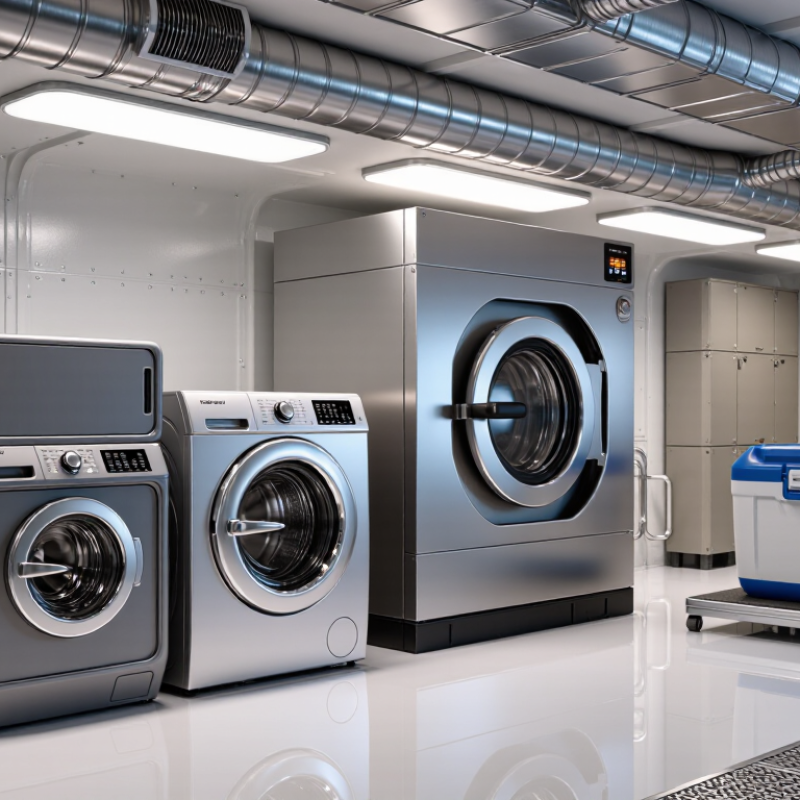
Marine washing machines are compact laundry systems engineered for ships, offshore platforms, and marine accommodation areas. Unlike household machines, they must tolerate vibration, salt-laden air, limited space, and unstable water pressure. Their stainless or protected cabinets resist corrosion. Reinforced suspension systems reduce movement during rough weather.
A typical marine washer fills its drum with metered freshwater and detergent. Sensors control water level, temperature, and washing time. The drum then accelerates during extraction, removing moisture before drying. Many units reuse selected rinse water or connect with onboard greywater treatment systems. That matters. According to the International Maritime Organization’s 2023 GHG Strategy, shipping should reduce emissions by 20–30% by 2030, compared with 2008 levels. Efficient water heating and shorter cycles can support that direction.
The main types include front-loading washers, washer-extractors, and combined washer-dryers. Washer-extractors suit crew laundries because they remove more water quickly. Combined units save floor space but may increase cycle time. UNCTAD’s Review of Maritime Transport reports that ships carry over 80% of global trade by volume, showing why reliable onboard equipment matters. In practical inspections, blocked filters and poorly secured hoses cause frequent trouble. A high efficiency rating does not guarantee marine performance. Vessel movement, hard water, and irregular maintenance still change results. The specification may look perfect. Real service conditions are less tidy.
What Are the 2026 Top Types of Marine Washing Machines?
What Are Marine Washing Machines and How Do They Work?
Typical specifications are representative ranges for marine-suitable washing-machine categories in 2026. Actual performance depends on the vessel, installation, water pressure, electrical system, load size, and model configuration. | Type | How It Works | Typical Load Capacity | Typical Power Requirement | Water Consumption | Drying Method | Best Marine Use |
| Compact Front-Load Washer | A horizontal drum rotates clothes through measured water and detergent. High-speed spinning removes much of the water before drying. | 2.0–2.8 cu. ft.
(57–79 L) | Approximately 1,200–2,000 W | About 10–20 gal.
(38–76 L) per wash | Spin-only; separate drying usually required | Larger yachts and vessels with a dedicated laundry space |
| Compact Top-Load Washer | A vertical tub uses an agitator or impeller to move clothing through water. The tub then spins rapidly to extract water. | 1.6–2.5 cu. ft.
(45–71 L) | Approximately 500–1,500 W | About 15–30 gal.
(57–114 L) per wash | Spin-only; line drying or separate dryer | Boats requiring simple loading and easy access from above |
| Washer-Dryer Combo | The same drum washes, spins, and dries clothing. Drying uses either condensation or ventless heat-pump technology, depending on configuration. | 1.8–2.5 cu. ft.
(51–71 L) | Approximately 1,200–2,000 W | About 10–25 gal.
(38–95 L) per wash | Ventless condensation or heat-pump drying | Enclosed cabins where space and external venting are limited |
| Portable Single-Tub Washer | A small tub agitates or pulsates the load. Water is added manually or through a connection, and the built-in spin compartment removes water. | 1.0–2.0 cu. ft.
(28–57 L) | Approximately 150–500 W | About 5–15 gal.
(19–57 L) per wash | Integrated spin extraction; air drying afterward | Small sailboats, auxiliary boats, and occasional use |
| Portable Twin-Tub Washer | One tub washes or rinses while a separate high-speed compartment spins the clothes. Wash and spin operations are usually controlled independently. | Wash: 1.5–2.5 cu. ft.
Spin: 0.8–1.5 cu. ft. | Approximately 200–600 W | About 5–15 gal.
(19–57 L) per wash | Separate spin extraction; no heated dryer | Vessels with limited electrical capacity and flexible storage |
| Low-Water High-Efficiency Washer | Sensors estimate load size and adjust water, temperature, and cycle time. The drum uses tumbling and high-speed spinning to reduce water use and drying time. | 2.0–2.8 cu. ft.
(57–79 L) | Approximately 1,000–2,000 W | About 8–15 gal.
(30–57 L) per wash | High-speed spin; separate or ventless drying | Liveaboards and long voyages where freshwater conservation matters |
How Marine Washing Machines Work
A marine washing machine typically connects to the vessel’s freshwater supply, electrical system, and grey-water drainage system. During a cycle, an inlet valve admits water, a drum or agitator moves the fabric, detergent removes soil, and a drain pump removes used water. The final high-speed spin extracts moisture. Marine installation also requires secure mounting, vibration control, correct drainage, adequate ventilation, and compatibility with the boat’s voltage, frequency, circuit protection, and freshwater capacity.
Which Types of Marine Washing Machines Are Available in 2026?
Marine washing machines available in 2026 generally fall into four practical types. Compact front-loading models suit cruising yachts with limited cabin space. They use less water and provide efficient spin cycles. Top-loading units remain convenient when bending is difficult. However, they usually need more vertical clearance above the drum.
Washer-dryer combinations are popular on liveaboard vessels. One cabinet handles washing and drying, which saves valuable storage space. Drying can take longer in humid cabins. Ventless designs reduce installation complexity, but they may consume more electricity. Portable washing machines offer another option for smaller boats. They are lighter, easier to store, and useful during occasional trips. Their smaller drums can make laundry feel repetitive.
Marine-rated machines are built to manage vibration, movement, and changing electrical conditions. Some operate on 12-volt or 24-volt systems, while others require standard alternating current. Freshwater-saving models are sensible for extended voyages. Still, water efficiency depends on the selected cycle and actual load size. A machine with automatic balancing can reduce shaking during rough passages. Good drainage matters too. Poor hose placement can leave water under the flooring.
I would check doorway measurements twice before choosing a model. A compact machine is not automatically suitable for every vessel. Space, power capacity, ventilation, and service access should guide the decision. Smart controls sound useful, but simple controls may be more dependable offshore. This point deserves more testing. Specifications can look impressive, yet daily maintenance often determines real performance.
How Do Top Marine Washing Machine Types Differ?
In 2026, the main marine washing machine types are compact front-loaders, top-loaders, and washer-dryer combos. Each design solves a different onboard problem. Compact front-loaders usually use less water and provide stronger spin extraction. That matters when drying space is limited. Their sealed doors also reduce splashing during rough passages. However, loading can feel awkward in a narrow cabin. Door clearance needs careful measurement.
Top-loaders offer faster access and simpler loading. They suit utility rooms with more overhead space. Many models tolerate frequent small loads, which helps families avoid overloading. Their wash cycles may consume more water, though. Freshwater tanks are not endless.
Washer-dryer combos save floor space and reduce handling between cycles. They are convenient in wet weather. Drying often takes longer, especially with towels or heavy work clothing. Ventilation becomes important because warm, damp air can collect inside the cabin.
Marine installation changes the comparison. A reliable unit needs secure mounting, balanced leveling, and protected electrical connections. Anti-vibration pads can reduce movement, but they cannot fix a weak mounting base. I have seen owners focus on capacity and overlook drainage height. That mistake can cause repeated pump problems. Salt air also deserves attention. Stainless hardware helps, yet regular rinsing and inspection remain necessary. Energy use differs sharply between heating cycles and cold washes. A cold cycle may be practical, but it will not remove every oily stain. Manufacturer data should be checked against the vessel’s voltage, water pressure, and available space. Some assumptions fail offshore.
What Features Matter When Choosing a Marine Washing Machine?
In 2026, marine washing machines fall into three practical groups: compact front-loaders, twin-tub units, and washer-dryer combinations. The best choice depends less on type than on onboard conditions. A front-loader usually saves water and handles steady loads well. A twin-tub can wash quickly, but requires more hands-on transfer. Combination units save space, although drying may take longer in humid cabins.
Space is limited.
Look for low water consumption, stable spin control, and a corrosion-resistant outer cabinet. Salt air reaches hinges, vents, and control panels faster than many owners expect. A reliable pump should drain into the vessel’s approved wastewater system without awkward hose bends.
Check the vibration rating, not just drum capacity. Rubber feet, leveling adjustment, and a locking door reduce movement in rough conditions.
Noise matters at night. Choose clear controls and a filter that opens without tools. These details make routine cleaning less frustrating.
Energy use deserves equal attention. A model compatible with the vessel’s electrical supply helps prevent nuisance trips and weak performance. Measure the installation space carefully, including door swing and service access. I once overvalued maximum capacity; a smaller drum proved easier to balance and maintain.
That judgment can change for larger crews. Read the manual for freshwater requirements, winter storage, and emergency drainage. Independent safety certification and a clear service network add useful confidence.
Still, no specification replaces a realistic load test with towels, workwear, and limited water.
How Should Marine Washing Machines Be Installed and Maintained?
Marine washing machines in 2026 generally fall into three practical types: compact front-loaders, space-saving top-loaders, and combination washer-dryers. Each type needs careful installation aboard a vessel. A machine that works perfectly at home may fail when the boat rolls, vibrates, or faces limited freshwater supply.
Choose a firm, level location near approved water, drainage, and electrical connections. Secure the washing machine with marine-grade brackets or locking hardware. Leave enough space around the unit for ventilation and service access. The drain hose should remain firmly attached and avoid sharp bends. Use a dedicated circuit with proper protection, and have a qualified marine electrician inspect the connection. Before the first wash, run an empty cycle and check for leaks, unusual movement, and drainage problems. I have seen owners overlook vibration. That small mistake can damage cabinets and hoses.
Tips: Clean the filter after several loads. Wipe the door seal dry. Keep the detergent drawer open between cycles. Use only the detergent amount recommended for low-water systems. Inspect hoses monthly for swelling, cracks, or loose clamps. During long storage, shut off the water supply, drain trapped water, and keep the door slightly open. Salt air deserves attention, even when the machine looks clean. A soft, damp cloth helps remove residue. The maintenance checklist is useful, but it is not perfect. Recheck it after rough weather or any unusual noise.